Moving to Boise is not the same decision it was ten years ago.
The city has grown, housing costs have changed, Meridian and the rest of the Treasure Valley have become more important to daily life, and choosing where to live now often means balancing commute time, schools, neighborhood character, housing costs and access to the things you actually use.
Boise still offers many of the qualities that attract people to southwest Idaho in the first place: quick access to outdoor recreation, a compact downtown, the Boise River Greenbelt, established neighborhoods, a major university, a growing restaurant and business scene, relatively easy access to the airport and four distinct seasons.
But moving here successfully requires more than liking the foothills in a photograph.
This guide covers what new residents should understand about housing, neighborhoods, schools, commuting, weather, utilities, transportation and getting settled in Boise in 2026.
Boise at a Glance
Boise is Idaho's capital and the largest city in the state.
It sits in the Treasure Valley, a larger metro area that also includes Meridian, Eagle, Garden City, Kuna, Nampa, Caldwell and other communities.
That regional context matters.
Someone who says they are moving to Boise may ultimately find that Meridian, Eagle, Southeast Boise, West Boise or another part of the valley fits their daily routine better.
Boise remains the employment, cultural and government center of the region, but the Treasure Valley functions increasingly as one connected metro area.
Is Boise Still Growing?
Yes.
The broader Treasure Valley has continued growing, and that growth affects housing, traffic, schools, development and the availability of services.
The important thing for a newcomer is not simply that Boise is growing.
It is that growth is not evenly distributed.
Established Boise neighborhoods can feel very different from newer subdivisions in Meridian, Kuna or west Ada County.
Before choosing a house, decide what kind of environment you actually want.
What Does It Cost to Live in Boise?
Housing is the biggest variable.
Boise is no longer a low-cost Western city where housing can be treated as an afterthought.
The City of Boise continues to identify housing affordability as a major local challenge, particularly as rents and home prices have risen faster than many household incomes.
Your actual cost of living will depend heavily on whether you rent or buy, neighborhood, household size, commute, childcare, utilities, insurance, transportation and lifestyle.
We will be publishing a dedicated Cost of Living in Boise, Idaho in 2026 guide because this topic deserves its own analysis.
For now, do not make the mistake of comparing only your current mortgage or rent to an online Boise estimate.
Look at the entire household budget.
Should You Rent Before Buying?
For many people moving from another state, renting first is worth considering.
You can learn a lot about Boise in six to twelve months that is difficult to understand from online research.
You may discover that you prefer North End over a newer suburb, Southeast Boise over West Boise, Meridian over Boise, a shorter commute over a larger house, Greenbelt access over foothills access, or older neighborhoods over new construction.
Buying immediately is not automatically wrong.
But choosing a location after living here is often easier than trying to predict your daily routine from another state.
Boise Neighborhoods Are Very Different
Do not treat Boise as one uniform housing market.
The city changes considerably from neighborhood to neighborhood.
Downtown Boise
Best for people who want walkability, restaurants, entertainment and easy access to the city center.
Housing is generally more urban and often more expensive per square foot than suburban alternatives.
Read our Ultimate Guide to Downtown Boise.
North End
Known for historic homes, mature trees, Hyde Park and immediate foothills access.
It has one of Boise's strongest neighborhood identities.
Read our Ultimate Guide to Boise's North End.
East End
Close to Downtown Boise, Warm Springs Avenue, foothills trails, the Old Idaho Penitentiary and Botanical Garden.
Read our Ultimate Guide to Boise's East End.
Southeast Boise
Popular for Greenbelt access, the Boise River, Boise State proximity, Bown Crossing and Barber Park.
Read our Ultimate Guide to Southeast Boise.
Boise Bench
An established central area with older homes, mid-century neighborhoods, the Boise Depot and convenient airport access.
Read our Ultimate Guide to the Boise Bench.
West Boise
More suburban in character with shopping, parks and quick access toward Meridian.
Read our Ultimate Guide to West Boise.
Our Best Neighborhoods to Live in Boise, Idaho in 2026 provides a broader comparison.
Boise or Meridian?
This will be one of the most important decisions for many newcomers.
Meridian is directly west of Boise and has grown into a major city in its own right.
Boise generally gives you stronger downtown access, older established neighborhoods, closer foothills access, Boise River and Greenbelt connections, more historic housing and shorter trips to central Boise employers.
Meridian generally gives you more newer housing, large suburban developments, major shopping areas, newer schools in many areas, easier access to western Treasure Valley growth and developments around The Village and Ten Mile.
Neither is automatically better.
The right answer depends on where you work, where your children attend school and how you want to spend your time.
How Important Is Your Commute?
More important than it may look on a map.
The Treasure Valley is not an enormous metro area, but traffic concentrates along a limited number of major corridors.
Interstate 84 carries a large share of east-west regional traffic.
Other heavily used routes include Eagle Road, Chinden Boulevard, State Street, Fairview Avenue, Franklin Road, Overland Road and Meridian Road.
A house that looks relatively close to your workplace may still create a frustrating daily commute depending on the corridor.
Before signing a lease or purchasing a home, drive the commute during the actual morning and afternoon rush periods.
Do not test it at 11 a.m. on Saturday.
Working in Downtown Boise
If you work downtown, areas such as Downtown, North End, East End, Boise Bench and parts of Southeast Boise can reduce your commute considerably.
West Boise and Meridian remain workable but put you into more regional traffic.
People who strongly value commute time should calculate the cost of an extra 30 to 60 minutes in the car every day before choosing a larger or cheaper house farther west.
Working in Meridian
If your employer is in Meridian, living west of central Boise may make considerably more sense.
West Boise and Meridian can reduce the need to cross the entire metro area each day.
This is a good example of why best Boise neighborhood lists can be misleading.
The best location depends on your actual life.
Is Boise Walkable?
Parts of it are.
Downtown Boise is highly walkable by regional standards.
Some nearby neighborhoods also allow residents to walk or bike to restaurants, parks and downtown.
Much of the broader metro remains car-oriented.
If walkability is important, focus on Downtown, North End, East End, portions of Boise Bench and areas near mixed-use neighborhood centers.
Public Transportation
Valley Regional Transit operates bus service in the Boise area.
Public transportation exists, but Boise is still much more car-dependent than cities with major rail or high-frequency transit systems.
For most households moving here today, access to a vehicle remains important.
The Boise River Greenbelt
One of the strongest quality-of-life features in Boise is the Greenbelt.
The pathway follows the Boise River and connects parks, neighborhoods, Boise State University, Downtown Boise, Garden City and Southeast Boise.
Read our complete Boise Greenbelt Guide.
Boise Foothills
The foothills define the northern edge of Boise.
People living in the North End, East End and parts of northeast Boise can reach hiking and mountain biking trails very quickly.
That access is one reason these areas are appealing.
It is also one reason housing can be competitive.
Schools in Boise
Families need to understand that Boise schools can mean different districts depending on where they live.
Two of the most important are Boise School District and West Ada School District.
Boise School District currently serves more than 21,000 students across 52 schools.
West Ada is the state's largest school district, serving roughly 40,000 students across 59 schools and covering much of Meridian and western Ada County.
School Boundaries Matter
Do not select a house based only on a real estate listing's school information.
Verify the address directly with the school district.
Boundaries can change.
West Ada approved new attendance zones for the 2026-27 school year in connection with the opening of Independence Elementary.
That is a useful reminder that today's assigned school is not something you should assume based on an old map or third-party website.
Open Enrollment
Both major districts have processes that may allow students to attend schools outside their assigned neighborhood.
Boise School District is currently accepting open-enrollment applications for the 2026-27 school year.
West Ada also opened its 2026-27 open enrollment process in January 2026, with transfers dependent on factors such as seat availability.
Open enrollment can create options, but do not buy a house assuming a transfer request will definitely be approved.
Boise Weather
Summer
Summers are hot, dry and sunny.
Long stretches of temperatures in the 90s are normal.
Outdoor activities are often more comfortable early in the morning or in the evening.
Fall
Fall is one of Boise's most comfortable seasons.
Temperatures cool, trees change color and outdoor recreation remains accessible.
Winter
Boise gets winter weather, but the city should not be confused with Idaho mountain towns.
Snow occurs, but valley conditions are generally milder than high-elevation destinations such as Bogus Basin, McCall or Stanley.
Freezing temperatures, inversions and occasional snow or ice still affect driving.
Spring
Spring can change quickly between cold, rain and warm sunny weather.
Foothills trails can become muddy, and using them while wet can damage the trail system.
Wildfire Smoke
New residents moving from areas without regular Western wildfire seasons should understand this issue.
Smoke from fires in Idaho and elsewhere in the West can affect Boise air quality during some summers.
Some years are much worse than others.
If anyone in your household has respiratory sensitivities, consider good HVAC filtration, portable HEPA air cleaners, tracking local air-quality readings and having indoor recreation options.
Boise Winters and Driving
If you are moving from a warm climate, Boise winter driving may require some adjustment.
You may encounter snow, ice, freezing fog, shaded icy streets and mountain driving conditions.
You do not necessarily need to build your entire lifestyle around deep snow.
But you should understand winter tires, vehicle preparation and how quickly conditions change between Boise and the mountains.
Boise Airport
Boise Airport is one of the metro area's biggest conveniences.
It sits only a few miles south of Downtown Boise and provides nonstop flights to a growing list of U.S. destinations.
Our Boise Airport Guide covers airlines, parking, rental cars, food and transportation.
Healthcare
Boise serves as a regional healthcare center.
Major systems include St. Luke's and Saint Alphonsus, along with clinics and specialty providers throughout the Treasure Valley.
When relocating, confirm your insurance network, primary care availability, pediatricians if needed, specialists, preferred hospital and prescription transfers.
Setting Up Utilities
Depending on your address, services may include electricity, natural gas, water, sewer, trash and recycling, and internet.
The provider varies by location.
Before moving day, verify which services you are responsible for activating and which are included through a landlord, HOA or property management company.
Internet Service
Internet availability can vary by neighborhood and even by individual address.
Do not assume that because a provider advertises service in Boise, your exact home qualifies for its fastest plan.
If you work remotely, verify provider, available speeds, upload speed, installation lead time and backup mobile coverage before signing a lease or purchasing a home.
Getting an Idaho Driver's License
New Idaho residents generally need to obtain an Idaho driver's license or identification card within 30 days of moving to the state.
The Idaho DMV requires documentation establishing identity, lawful presence or citizenship, Idaho residency and legal name.
Providing two qualifying proofs of Idaho residency can also make you eligible for Idaho's REAL ID-compliant Star Card.
Registering Your Vehicle
New residents must also title and register their vehicles in Idaho within 30 days of moving.
The process generally requires the vehicle, current title, current registration, identification, Idaho insurance and a VIN inspection.
As of July 1, 2026, Idaho no longer issues annual registration stickers and has moved toward permanent license plates, although registration must still be renewed.
Idaho Vehicle Insurance
Notify your insurance company when you move.
Idaho electronically verifies vehicle insurance, and your coverage needs to comply with Idaho requirements.
The Idaho Transportation Department currently lists minimum liability coverage of $25,000 for injury or death of one person, $50,000 for injury or death of two or more people and $15,000 for property damage.
Your own financial situation may justify considerably higher limits.
Changing Your Address
Create a relocation checklist for USPS, driver's license, vehicle registration, insurance, banks, credit cards, employer, healthcare, subscriptions, schools, voter registration and utilities.
Do this systematically rather than waiting for old mail to remind you.
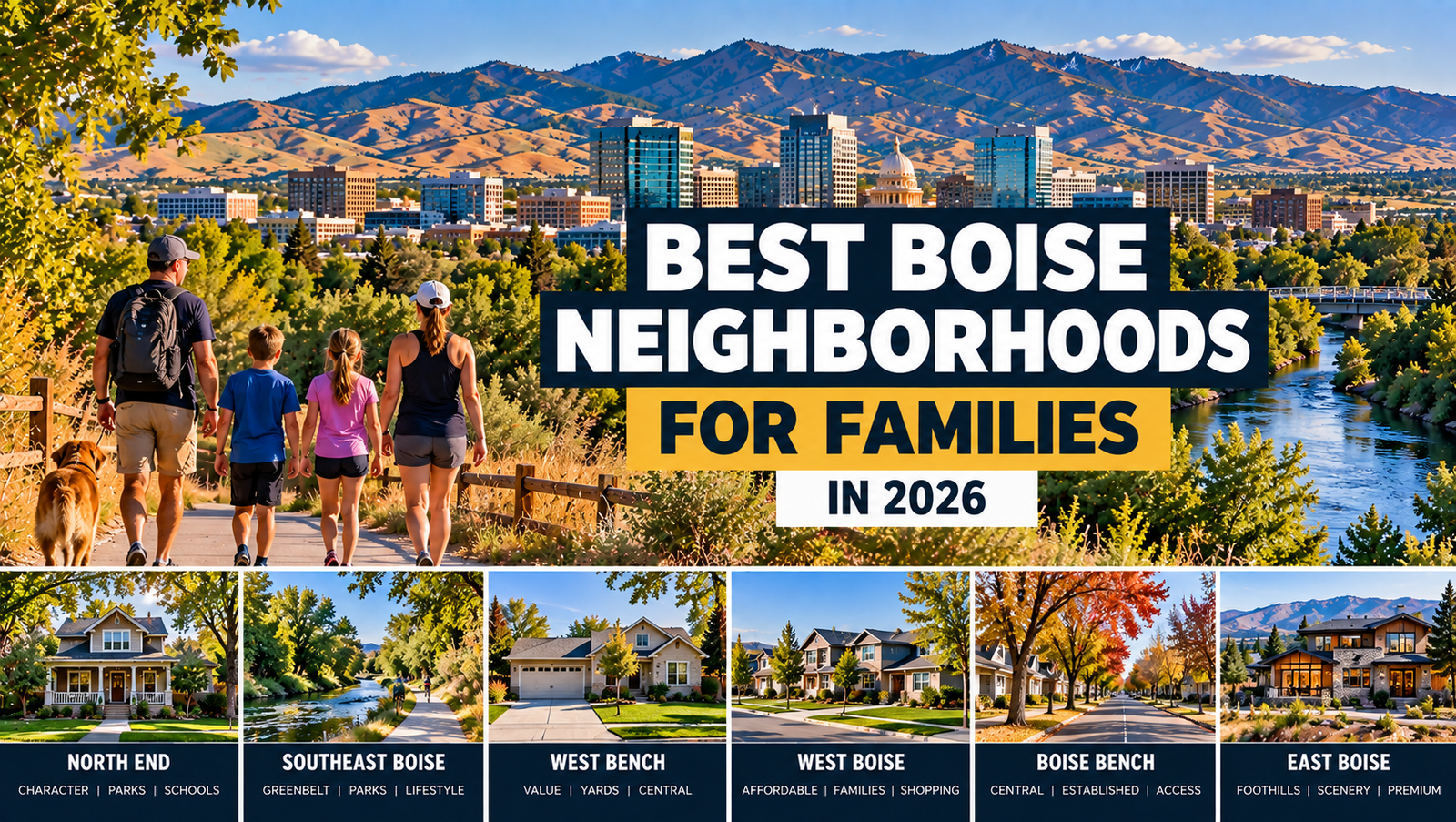
Families Moving to Boise
Families should research more than schools.
Also look at childcare, parks, sports leagues, pediatric healthcare, commute to school and work, after-school programs, recreation and neighborhood traffic.
Our Boise With Kids Family Guide is a good starting point for understanding what family life here can actually look like.
Boise for Remote Workers
Boise can work very well for remote workers because you can live relatively close to parks, trails and downtown without being in a massive metro.
But remote workers should verify internet service carefully.
Also think about whether you actually want to live farther from the city center simply because you do not commute.
Commute is only one part of location.
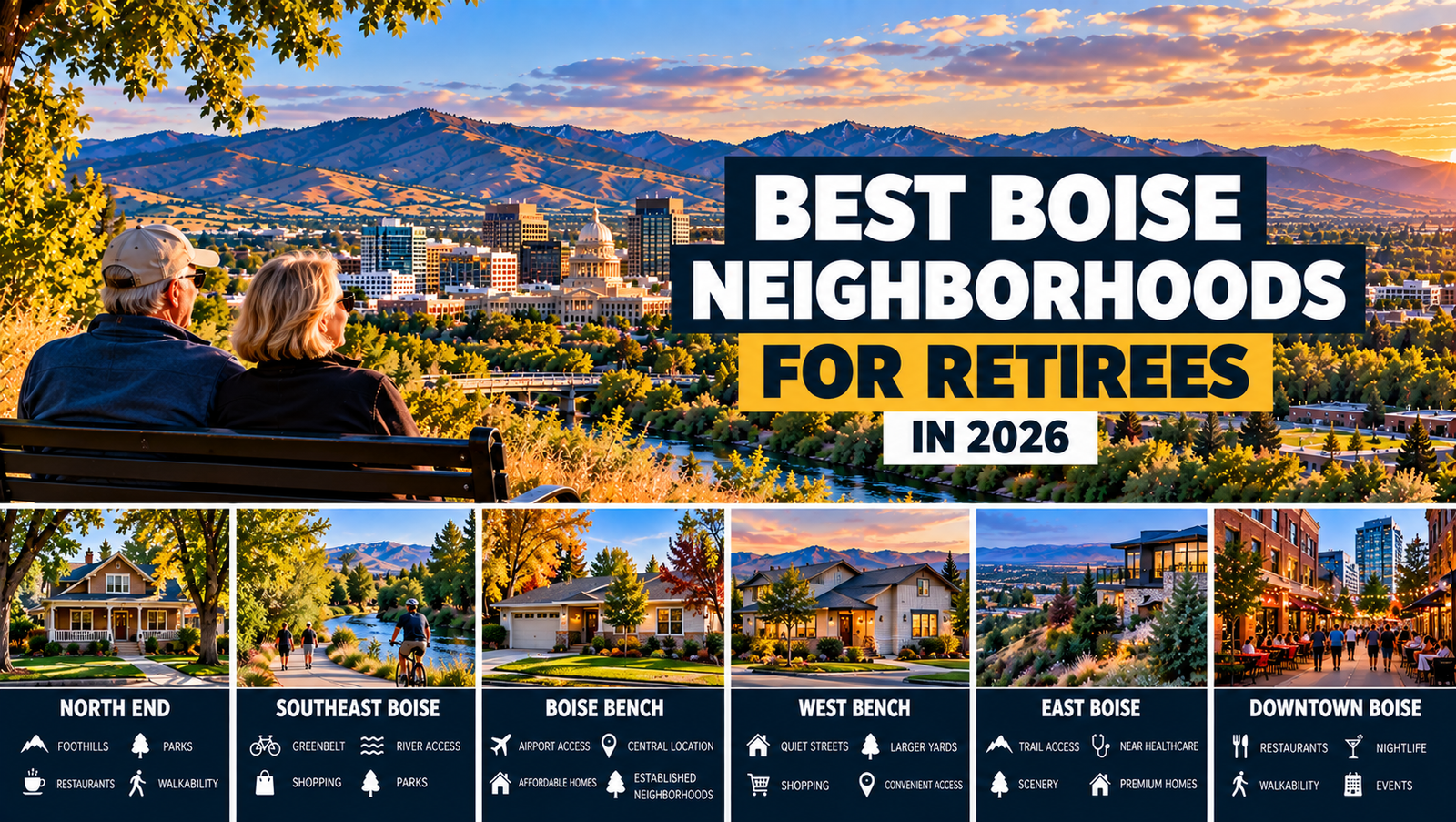
Boise for Retirees
Boise appeals to some retirees because of healthcare access, outdoor recreation, airport proximity and the range of neighborhoods available.
Important factors to compare include winter conditions, property type, healthcare proximity, driving, taxes, access to family, maintenance and neighborhood walkability.
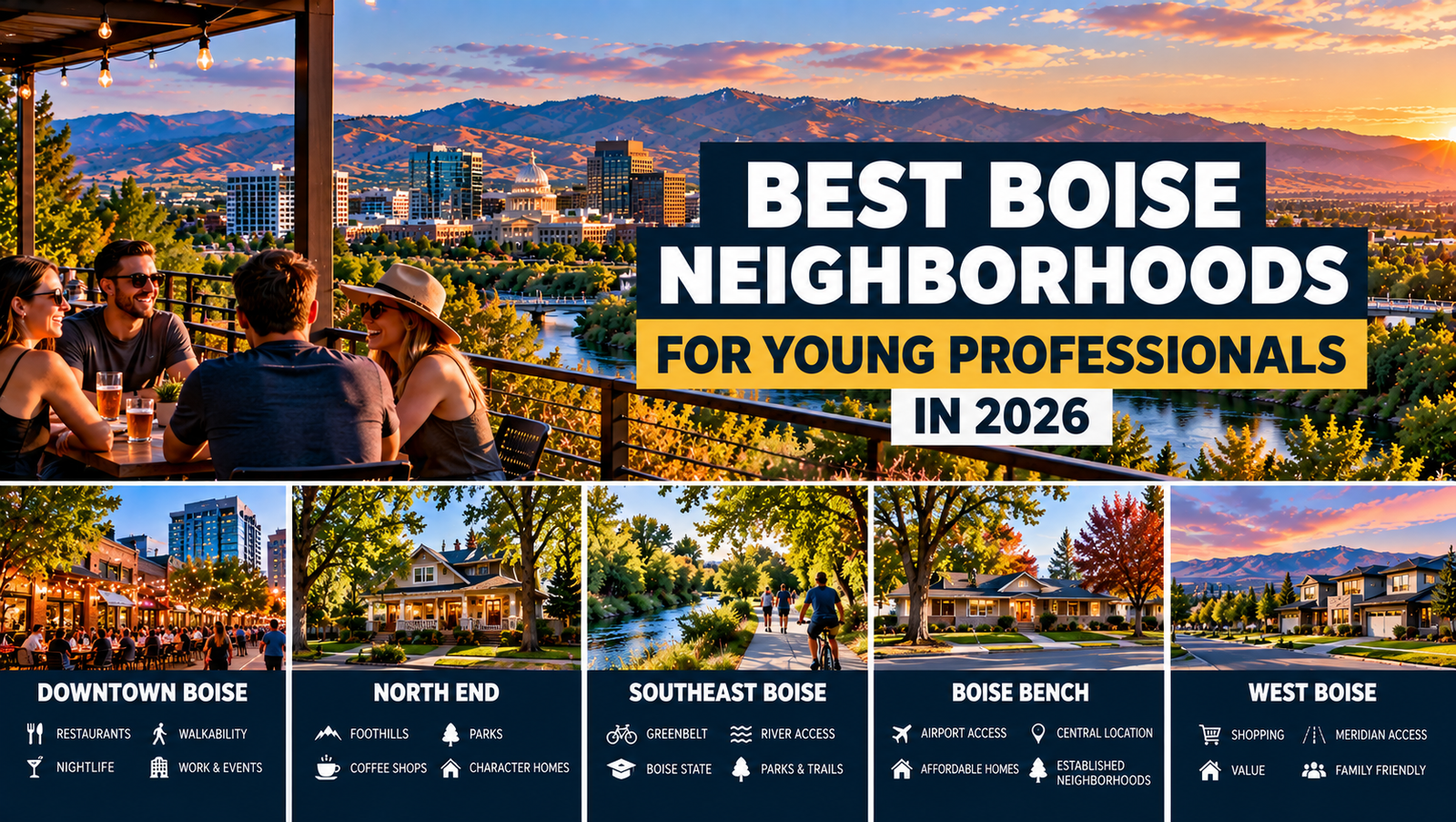
Boise for Young Professionals
Young professionals may prioritize Downtown Boise, North End, Boise Bench, areas near Boise State, Garden City, walkable restaurants and nightlife.
Someone working remotely may value location differently from someone commuting to Meridian every day.
Again, start with your routine rather than a generic neighborhood ranking.
What Is There to Do After You Move?
A lot.
Some of the easiest ways to start learning the city include the Boise River Greenbelt, foothills trails, Downtown Boise, Hyde Park, local coffee shops, farmers markets, Boise State events, parks and seasonal festivals.
Use our Ultimate Boise Visitor Guide even if you are moving here rather than visiting.
Do Not Judge Boise Only by Downtown
Downtown is one part of the city.
Before selecting a home, spend time in North End, Southeast Boise, Boise Bench, West Boise, East End, Meridian, Eagle and Garden City.
Drive around at different times.
Shop at the grocery store you would actually use.
Test the commute.
Visit the neighborhood after dark.
You are choosing a daily routine, not a vacation rental.
Do Not Judge the Treasure Valley by One Weekend
A relocation scouting trip is valuable, but one weekend can mislead you.
Weather changes.
Traffic changes.
School schedules change.
Event weekends change downtown activity.
If possible, visit during the season you are most worried about.
Moving From a Larger Metro
People moving from places such as Seattle, Portland, Los Angeles, Phoenix, Dallas or Denver may initially find Boise easier to navigate.
But that does not mean there is no traffic, congestion or development pressure.
Expect a smaller metro with many of the same growth issues larger cities face, only on a smaller scale.
Moving From a Small Town
The adjustment can work in the opposite direction.
Boise may feel substantially busier and more expensive than a small Idaho or rural Western community.
There are more services, jobs and entertainment.
There is also more traffic, competition for housing and suburban growth.
What Boise Does Well
access to parks and outdoor recreation
downtown and river proximity
Greenbelt connectivity
airport convenience
established neighborhoods
proximity to mountains and public lands
growing food and entertainment options
What New Residents Sometimes Underestimate
housing costs
summer heat
wildfire smoke
regional traffic
rapid suburban development
how much daily life extends into Meridian and the broader Treasure Valley
winter inversions
competition for some services and appointments
A Practical Moving-to-Boise Checklist
Before choosing a home:
Identify where you will work.
Test the commute during rush hour.
Verify the exact school boundary.
Check internet service at the exact address.
Compare full housing costs.
Visit the neighborhood during the day and evening.
Decide how important downtown, Greenbelt or foothills access is.
Check proximity to groceries and healthcare.
Research utilities.
Understand HOA rules if applicable.
After moving:
Transfer utilities.
Update insurance.
Obtain an Idaho driver's license within 30 days.
Title and register vehicles within 30 days.
Enroll children in school.
Establish local healthcare.
Update your mailing address.
Learn your commute before the first day of work.
Explore your immediate neighborhood.
Start learning Boise beyond the route between home and work.
The Biggest Moving Mistake
The biggest mistake is choosing based entirely on the house.
A beautiful house can become frustrating if the commute is wrong, the school assignment does not work, everything you do requires a long drive, internet service is poor or the neighborhood does not fit your lifestyle.
Start with location and routine.
Then evaluate the house.
The Bottom Line
Boise remains an appealing place to live for many people, but moving here in 2026 requires realistic planning.
Housing is more expensive than many newcomers expect.
Traffic matters more than the map suggests.
Boise and Meridian increasingly function as part of the same regional economy.
School district boundaries matter.
And the exact neighborhood you choose can completely change your experience.
The upside is that Boise still offers an unusual combination of city access and outdoor recreation.
You can live near downtown and still reach foothills trails quickly.
You can bike along the Boise River.
You can reach the airport without crossing an enormous metro.
And you can choose between historic neighborhoods, central residential areas and newer suburban development.
Do the research before you sign anything.
Spend time in the neighborhoods.
Test your commute.
Verify schools and internet service.
Then choose the part of the Treasure Valley that actually fits the life you plan to live here.
This post may contain affiliate links. We may earn a commission when you purchase through links on this site at no additional cost to you.