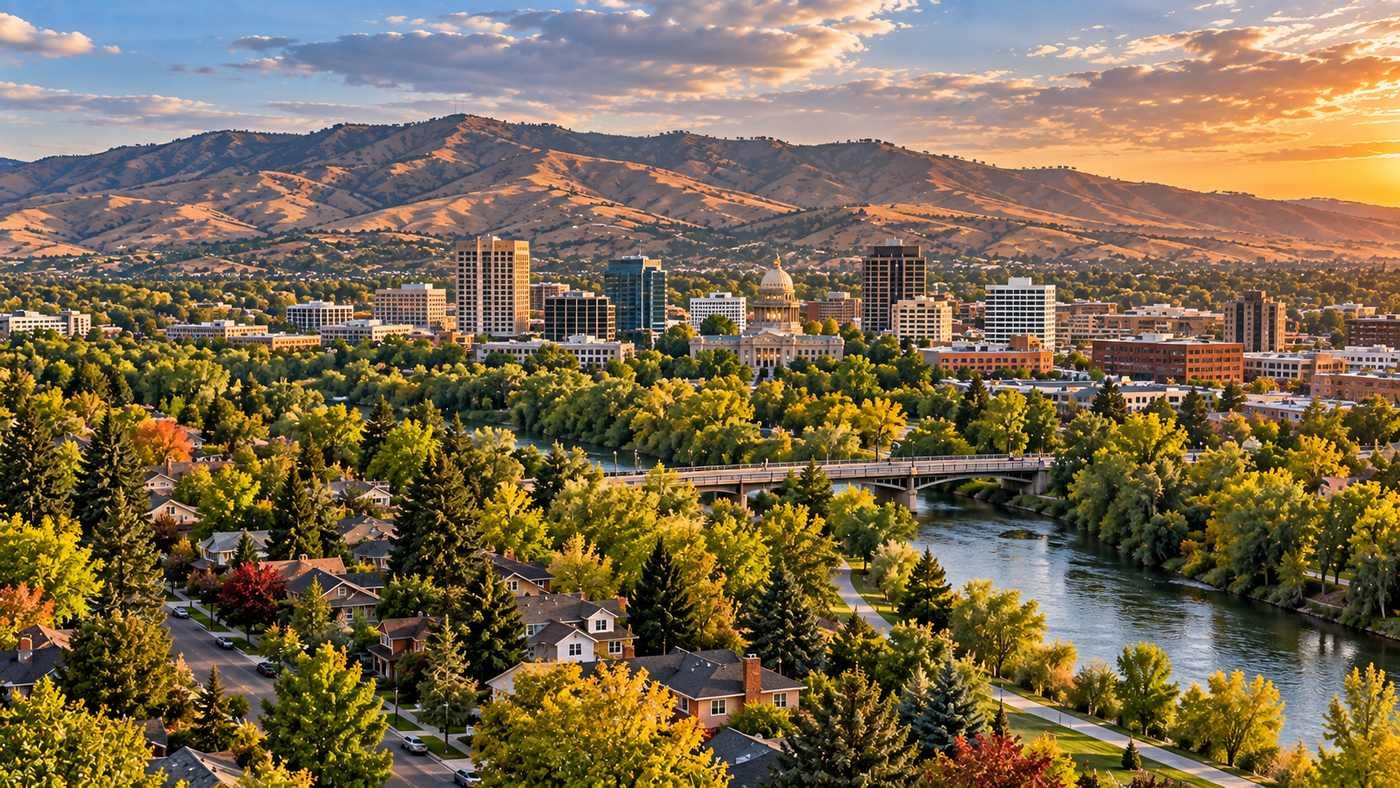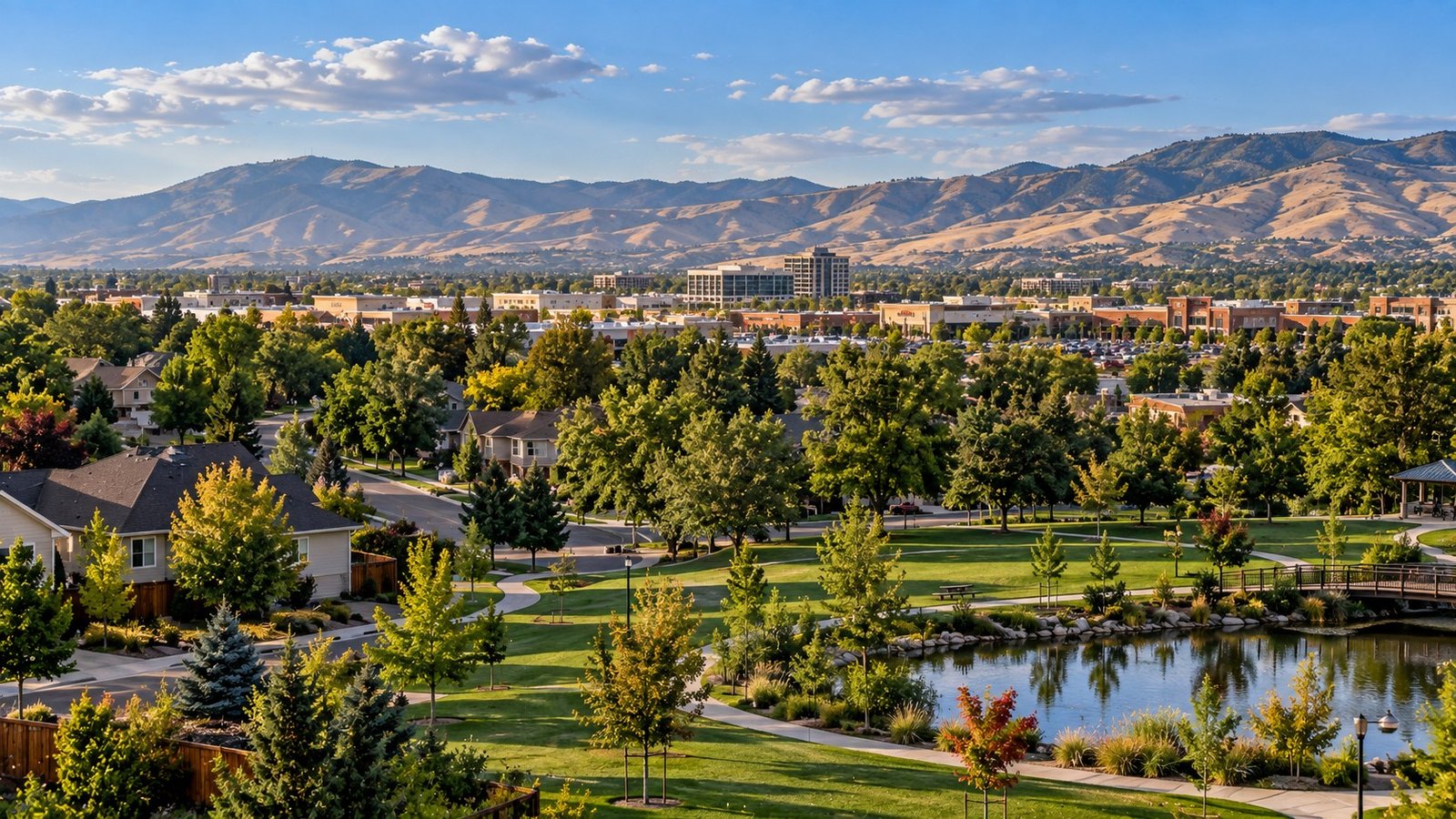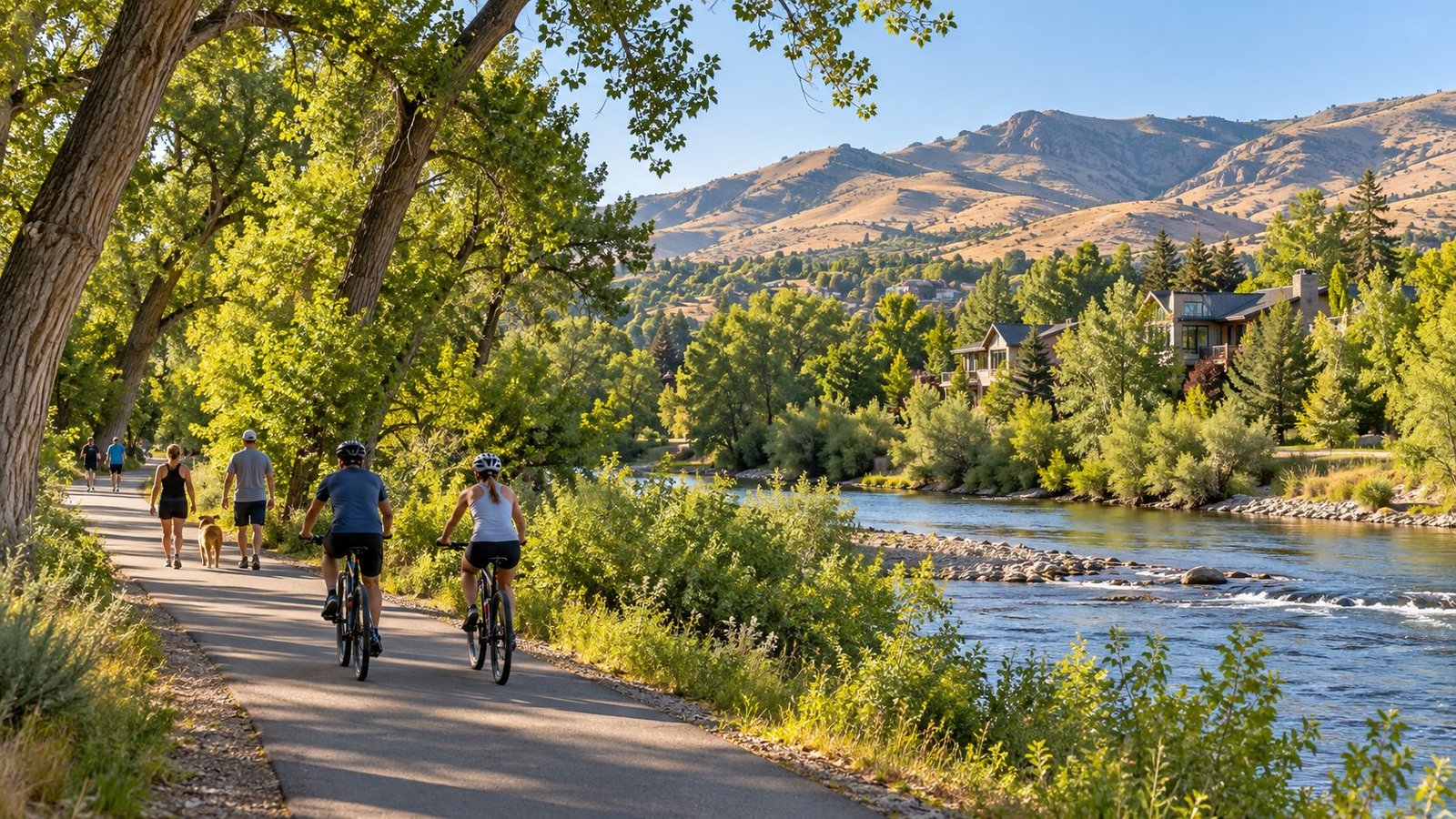
The Boise Bench is difficult to summarize because it is not really one neighborhood.
It is a broad elevated section of Boise south of downtown, made up of several distinct residential areas with different architecture, parks, commercial corridors, and personalities.
Near the northeast edge you have the historic Boise Depot and Crescent Rim. Farther west and south you find mid-century ranch homes, mature neighborhoods, local restaurants, neighborhood parks, and some of Boise’s most culturally diverse food options.
And despite feeling separate from downtown, many parts of the Bench are only a few minutes away.
That combination is the appeal.
Why Is It Called the Boise Bench?
The name comes from geography.
The Bench is a broad natural terrace sitting above the Boise River valley. Boise residents have referred to this elevated area as the Bench since at least the early 1900s.
Drive south from downtown and you can physically feel the change. You climb from the river valley onto a flatter plateau.
That elevation helped create some of the Bench’s best-known views and shaped how the area developed.
The Bench Is Bigger Than One Neighborhood
One important thing to understand is that locals use “the Bench” as a broad geographic term.
Depot Bench
Central Bench
Central Rim
Hillcrest
Morris Hill
Vista
portions of the Overland corridor
So saying someone lives on the Bench does not tell you everything. The exact pocket matters.
Start at the Boise Depot
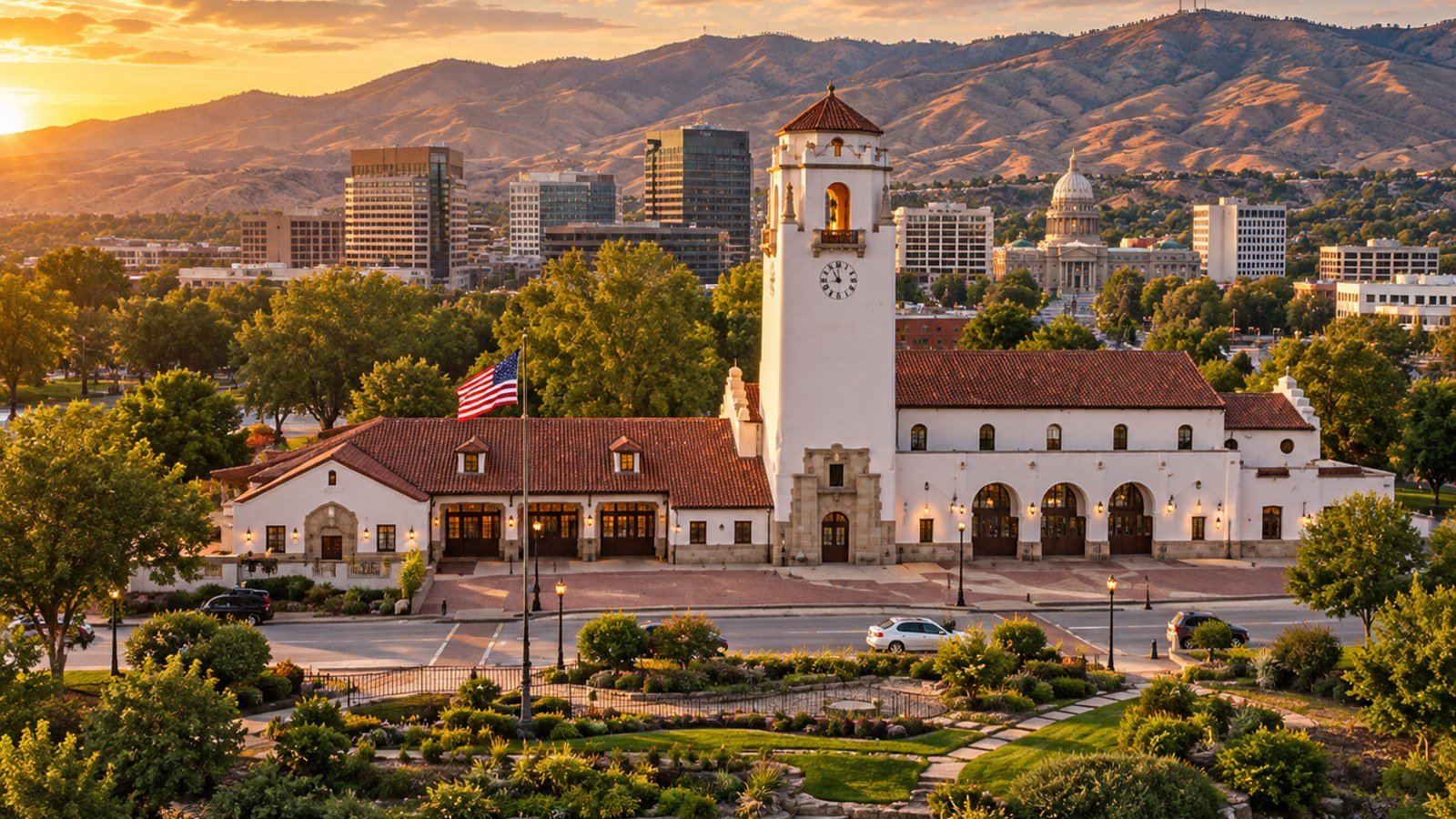
The Boise Depot is the obvious place to begin.
The Spanish/Mission-style former railroad station opened in 1925 and sits dramatically above Capitol Boulevard, creating one of Boise’s best city views.
From the Depot grounds, you can look directly north toward downtown and the Idaho State Capitol.
That alignment was deliberate. Capitol Boulevard was designed to visually connect the railroad station with Boise’s civic center.
One important 2026 note: check current access before planning around going inside, because restoration work can affect public access.
The view is still the reason to know where it is.
Walk Through Platt Gardens
Platt Gardens sits immediately in front of the Depot.
The landscaped hillside gives you lawns, mature plantings, views toward downtown, and the Depot as a backdrop.
This is one of Boise’s better quick photo stops.
You do not need two hours here. Fifteen or twenty minutes around the gardens and overlook is usually enough before continuing into the surrounding Depot Bench neighborhood.
Explore Crescent Rim
Crescent Rim is one of the most recognizable residential parts of the Bench.
Development along the rim began around the late 1920s, taking advantage of views toward downtown, the river valley, and foothills.
This area feels noticeably different from the flatter central portions of the Bench.
You get mature landscaping, established homes, elevated streets, and immediate access toward Ann Morrison Park below.
If someone tells you they love the Bench because of the views, this is probably the version they are imagining.
Look for Boise’s Mid-Century Architecture
The Bench is one of Boise’s strongest areas for mid-century residential architecture.
After World War II, the area developed rapidly, and neighborhoods filled with ranch homes, split levels, modest cottages, and more ambitious mid-century designs.
That gives the Bench a very different visual identity from the Victorian and Craftsman-heavy North End.
If you like 1950s and 1960s homes, the Bench is worth simply driving through.
Visit Morris Hill Park
Morris Hill Park is a useful neighborhood stop.
The park includes a playground, picnic areas, walking space, and a popular fenced dog park.
It is not a citywide destination like Julia Davis Park.
That is actually part of its value.
This is what much of the Bench feels like: neighborhood-scale parks built into residential areas rather than giant attractions.
Explore Morris Hill Cemetery
Nearby Morris Hill Cemetery adds a much older layer of Boise history.
The city established the cemetery in 1882, making it one of Boise’s significant historic burial grounds.
Many prominent Boise and Idaho figures are buried here, and the cemetery also reflects the city’s changing immigrant and cultural communities.
If historic cemeteries interest you, it can function almost like an outdoor local-history archive.
Just remember that it is still an active cemetery first.
Spend Time at Cassia Park
Cassia Park is another example of everyday Bench recreation.
The park includes open lawn, a playground, walking paths, tennis courts, softball facilities, picnic areas, and public art.
This is a better stop if you have kids or want somewhere casual to spend an hour than if you are trying to check off famous Boise landmarks.
And that distinction matters.
The Bench is much more about living in Boise than sightseeing in Boise.
Owyhee Park
Owyhee Park provides another neighborhood park farther south.
It includes open grass, play equipment, basketball and tennis facilities, and space for everyday neighborhood recreation.
Again, not a tourist attraction.
That is fine.
Not every park needs a gift shop and an Instagram hashtag.
Coffee on the Bench
The Bench coffee scene has improved considerably.
Push & Pour has a Latah Street location that combines specialty coffee with a relaxed neighborhood setting and patio space.
Primal Coffee is another popular Depot Bench stop and has developed a cozy, eclectic reputation.
For more options around the city, use Best Coffee Shops in Boise, Idaho in 2026.
One of Boise’s Most Interesting Food Areas
This might be the Bench’s most underrated strength.
Downtown gets most of the attention when visitors talk about Boise restaurants.
But the Bench has a much more scattered, multicultural collection of independently owned places tucked into neighborhood commercial strips and older shopping centers.
You are more likely to find the restaurant in a strip mall than beneath a boutique hotel.
Do not let that stop you.
Some very good decisions begin in strip malls.
The Vista and Overland Corridors
Vista Avenue and Overland Road are major commercial spines through the broader Bench.
These are not charming pedestrian districts like Hyde Park.
They are practical city corridors with grocery stores, restaurants, small businesses, hotels, services, and fast access toward I-84 and the airport.
That convenience is a major reason the Bench works well for people who want to remain central without living downtown.
It is also why the exact location matters.
A quiet residential block a few streets off Vista feels very different from living directly on a busy arterial.
Why Orchard Street Is Called Orchard
Before much of the Bench became residential, large portions were agricultural.
Once irrigation reached the area in the late 19th and early 20th centuries, orchards and farms expanded across the Bench.
Apples, cherries, peaches, and other crops became important enough that names such as Orchard Street reflect that agricultural history.
Most of that landscape is gone now.
But the road names still remember it.
Boise Bench vs. the North End
This is one of the most useful neighborhood comparisons.
The North End has a stronger historic identity, better-established walkability around Hyde Park, and direct foothills access.
The Bench generally feels more spread out, has a larger concentration of mid-century housing, and offers easier access toward the airport and interstate.
The architecture is different too.
North End often means Craftsman, bungalow, and older historic homes. The Bench often means ranch houses, cottages, and mid-century designs.
Compare it directly with The Ultimate Guide to Boise’s North End.
Boise Bench vs. Southeast Boise
This comparison is more about lifestyle.
Southeast Boise revolves around the Boise River, Greenbelt, Bown Crossing, Barber Park, and newer neighborhoods toward Harris Ranch.
The Bench is more established, more urban, and more centrally connected to major roads.
Southeast Boise tends to feel recreation-first.
The Bench feels location-first.
Both can get you downtown quickly. They just do it differently.
See The Ultimate Guide to Southeast Boise for the other side of that comparison.
One of the Bench’s Biggest Advantages: Location
Geographically, the Bench is extremely practical.
Depending on where you are, downtown Boise and the airport can each be only several minutes away, while I-84 provides quick access across the Treasure Valley.
That can matter more in everyday life than living next to the trendiest coffee shop.
Especially at 5:30 on a Monday morning when you have a flight.
A Perfect Boise Bench Morning
Start with coffee around Latah Street.
Drive through the Depot Bench residential streets.
Head toward Crescent Rim.
Stop at the Boise Depot overlook and Platt Gardens.
Drive west through some of the mid-century neighborhoods.
Finish with lunch somewhere on the Bench rather than heading back downtown.
That gives you a much better sense of the area than visiting one attraction and leaving.
A Perfect Boise Bench Afternoon
Another option:
Walk around Morris Hill Park.
Explore a few residential streets.
Stop at Cassia Park if you have kids.
Find one of the Bench’s independent restaurants for dinner.
Drive back toward Crescent Rim near sunset.
That last part is optional.
But Boise usually looks better during golden hour.
Best Time to Visit
The Bench works year-round.
Spring gives you mature landscaping and comfortable temperatures.
Summer is good for parks, patios, and long evenings.
Fall may be the most attractive season because many of the older residential streets have large mature trees.
Winter is quieter and emphasizes just how central the neighborhood is to indoor activities, downtown, and the airport.
Unlike some of our outdoor-heavy neighborhood guides, the Bench does not depend on one season.
What Is It Like to Live on the Boise Bench?
This should absolutely become its own supporting article.
The biggest themes are central location, mature neighborhoods, varied housing stock, mid-century homes, proximity to downtown, airport access, I-84 access, neighborhood parks, diverse restaurants, and significant block-to-block variation.
That final point is important.
The Bench is too large to make blanket statements about traffic, walkability, housing condition, or neighborhood feel.
So our future living guide should compare Depot Bench, Central Bench, Hillcrest, Vista, and Morris Hill separately.
Pair the Bench With Downtown
The Depot area sits so close to downtown that pairing the two is easy.
Spend the morning exploring downtown.
Then head south up Capitol Boulevard toward the Depot.
The view from the Bench back toward downtown makes the geography suddenly make sense.
Use The Ultimate Guide to Downtown Boise for the first half of that day.
Connect It to the Rest of YoBoise
Explore Downtown with The Ultimate Guide to Downtown Boise.
Compare with the North End using The Ultimate Guide to Boise’s North End.
Compare with Southeast Boise using The Ultimate Guide to Southeast Boise.
Compare with the East End using The Ultimate Guide to Boise’s East End.
Find coffee with Best Coffee Shops in Boise, Idaho in 2026.
Start earlier with Best Breakfast and Brunch Spots in Boise, Idaho in 2026.
The Bottom Line
The Boise Bench is not Boise’s easiest neighborhood to explain.
That may be exactly why it is interesting.
It is historic without being uniformly historic.
It is central without being downtown.
It has mid-century houses next to older cottages.
It has quiet residential streets a few blocks from major commercial roads.
And some of Boise’s most interesting restaurants are sitting in buildings you would probably drive past if nobody told you to stop.
The Bench requires a little more exploring.
It usually rewards it.
This post may contain affiliate links. We may earn a commission when you purchase through links on this site at no additional cost to you.